
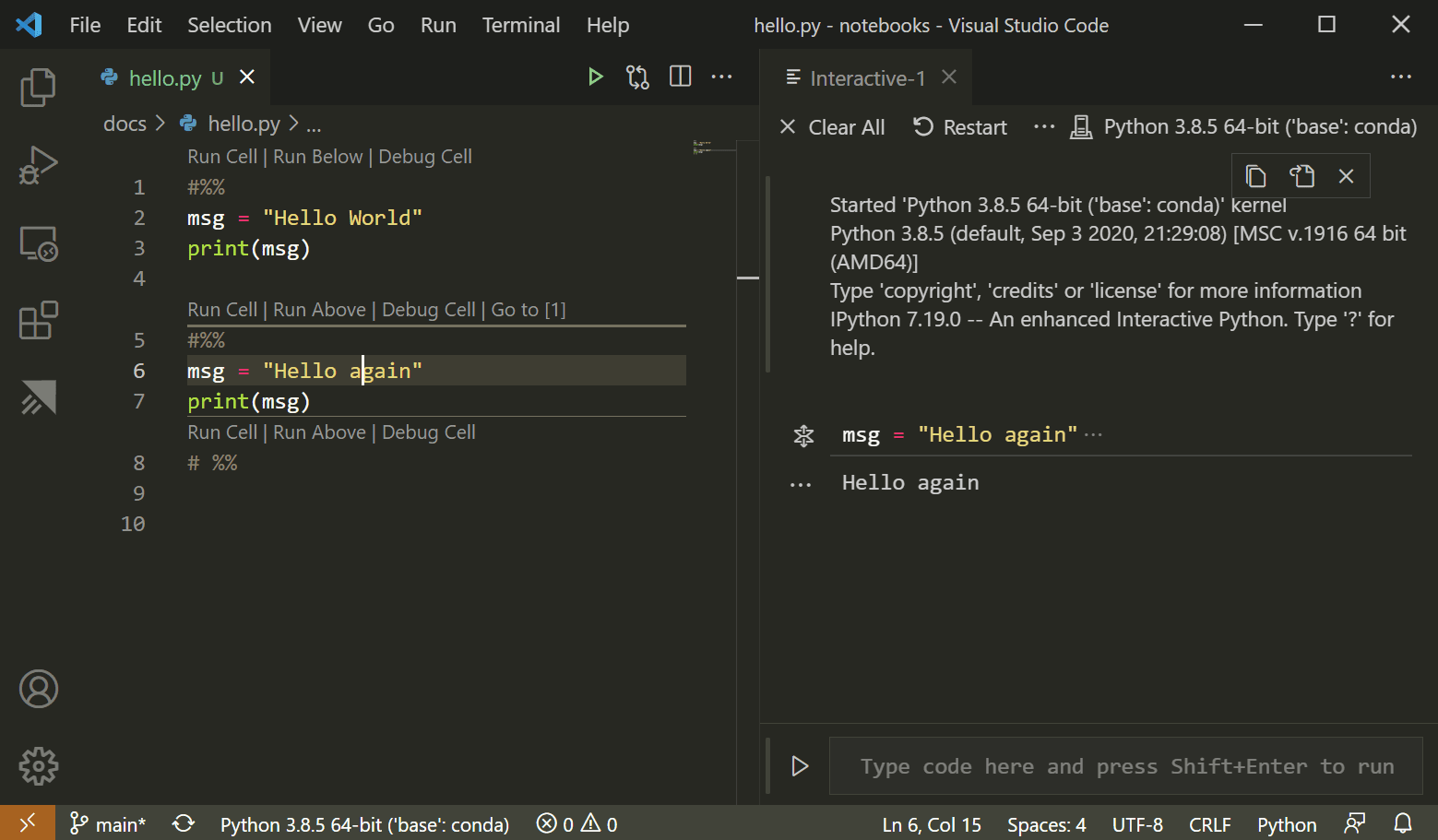
The Notebook API allows Visual Studio Code extensions to open files as notebooks, execute notebook code cells, and render notebook outputs in a variety of rich and interactive formats. You may know of popular notebook interfaces like Jupyter Notebook or Google Colab – the Notebook API allows for similar experiences inside Visual Studio Code.
Jupyter notebooks in Visual Studio Code does not use the active virtual environment. Ask Question Asked 1 year, 6 months ago. Active 5 days ago. Viewed 10k times 11. I write Python code in Visual Studio Code and run the program from a terminal in which I have activated a virtual environment, and it works fine. However, if I create notebook. Use Notebooks in Visual Studio Code VS Code is a free code editor that you can use locally or connected to remote compute. Combined with the Python extension, it offers a full environment for Python development including a rich native experience for working with Jupyter Notebooks. Follow me on twitter: depth tutorial about how to get and open jupyter notebook inside visual studio code.
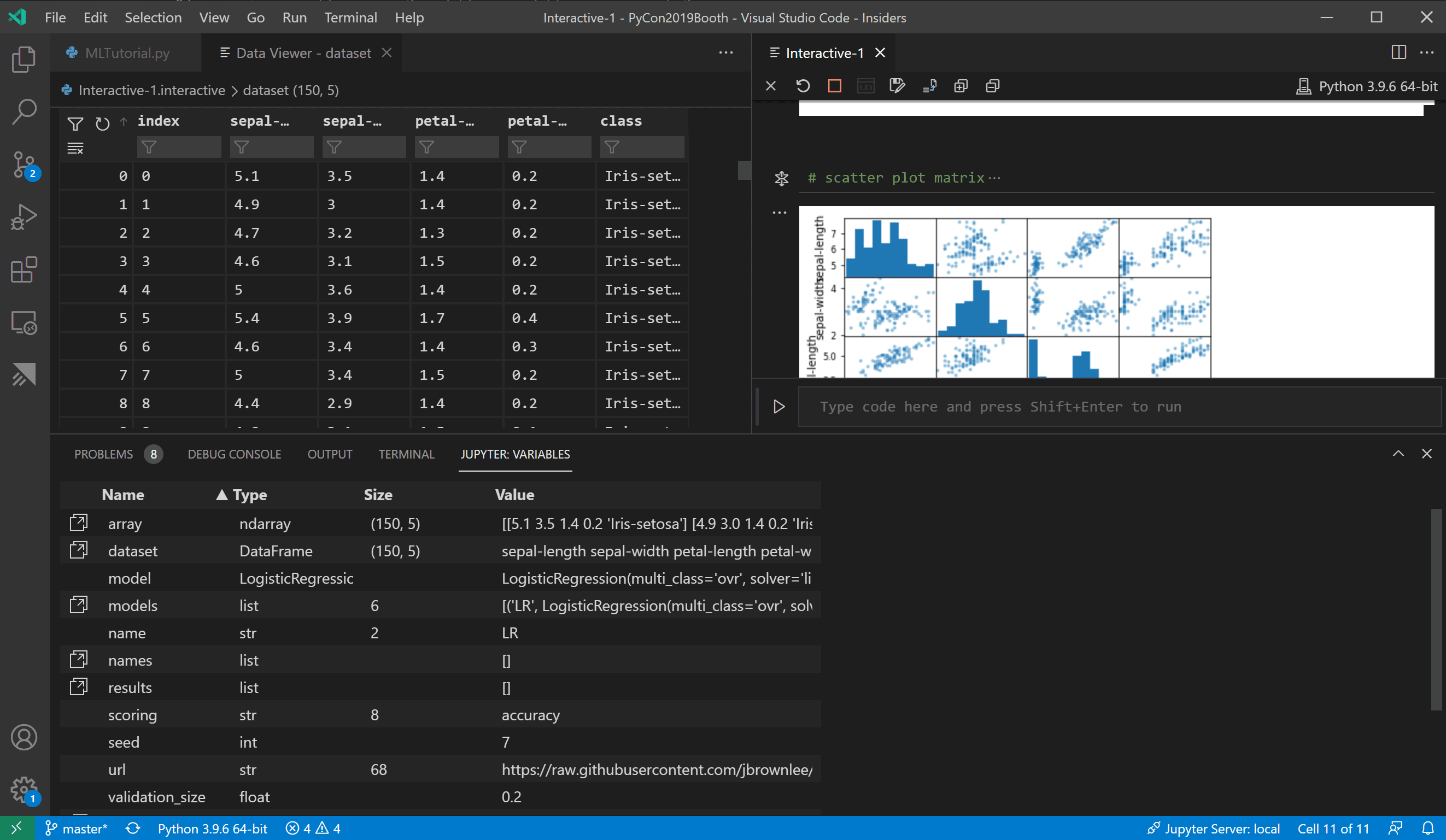
A Visual Studio Codeextension that provides basic notebook support for language kernels that are supported in Jupyter Notebooks today. Many language kernels will work with no modification. To enable advanced features, modifications may be needed in the VS Code language extensions.
Working with Python
Whether you are on VS Code Stable or VS Code Insiders, if you would like to work with Python just make sure you're using the latest version of the Python Extension to enjoy the joint partnership of the Python and Juypter Extensions.
Please follow the Python Extension ReadMe instructions to get started and visit the Python Documentation to learn more about how the Python and Jupyter Extension are working together to provide an optimum Python notebooks experience.
Working with other Languages
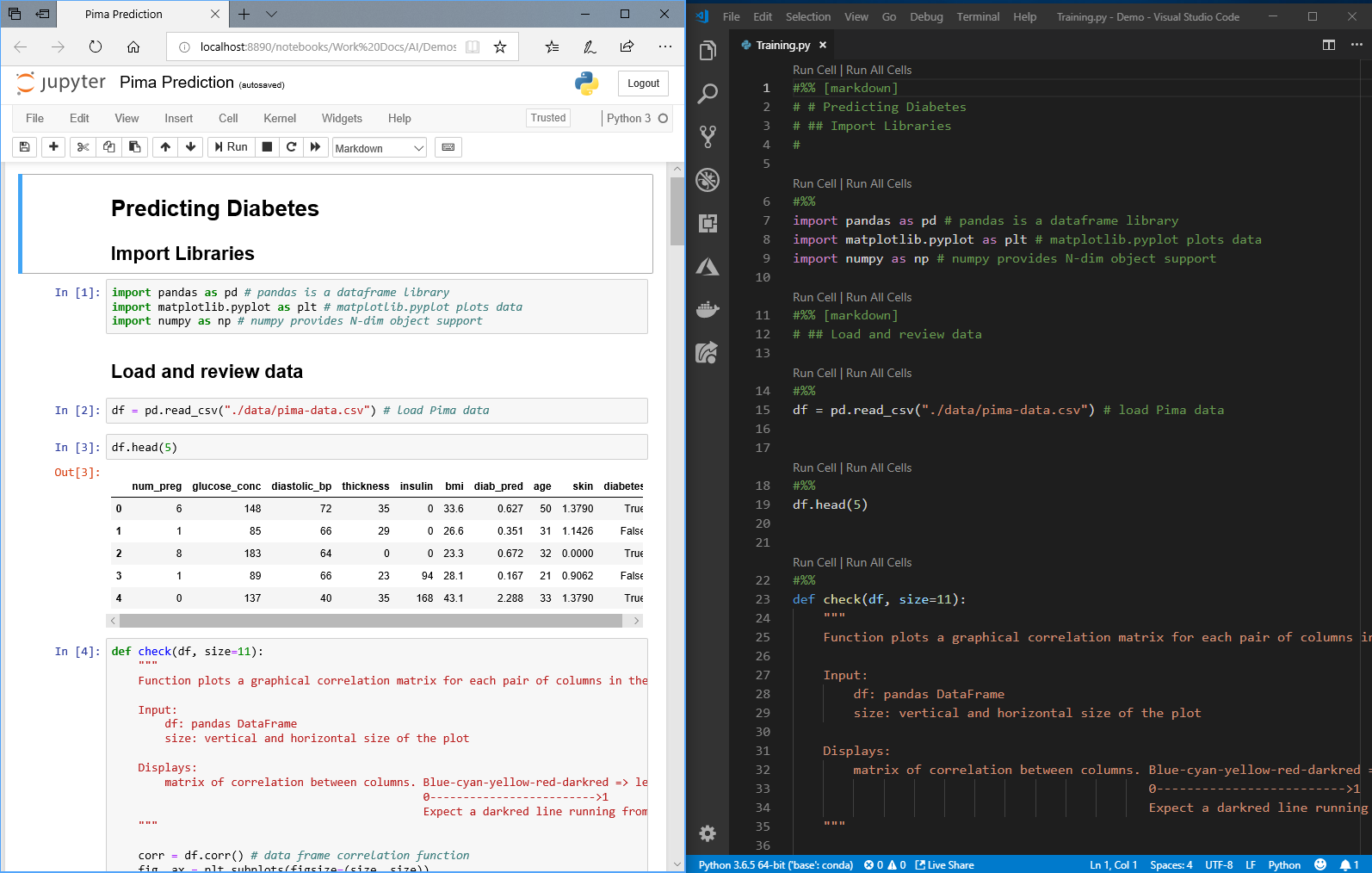
The Jupyter Extension supports other languages in addition to Python such as Julia, R, and C# in VS Code Insiders with our latest Native VS Code Notebooks Experience!
Quick Start

Esxi 4.1 license keygen. Step 1. Install VS Code Insiders
Step 2 If not working with Python, make sure to have a Jupyter kernelspec that corresponds to the language you would like to use installed on your machine.
Step 3. Install the Jupyter Extension
Step 4. Open or create a notebook file and start coding!
Special Note: The Jupyter Extension in VS Code Insiders will include our Native Notebooks experience by default. Because we are running in VS Code Insiders and this build is updated every day, there may be times when our extension may fail to work at all. We do attempt to ensure that this doesn't happen frequently. If it does, we strive to provide an updated extension build by the next business day. However, if you'd like to opt out of the native experience while working in VS Code Insiders:
- Open the command palette (Windows: Ctrl + Shift + P, iOS: Command + Shift + P) and select 'Preferences: Open Settings (JSON)'
- Add the following code to your JSON settings:
'jupyter.experiments.optOutFrom': ['NativeNotebookEditor'],
Notebooks Quick Start
To create a new notebook open the command palette (Windows: Ctrl + Shift + P, iOS: Command + Shift + P) and select the command
'Jupyter: Create New Blank Notebook'Select your kernel by clicking on the kernel picker in the bottom right of the status bar or by invoking the
'Notebook: Select Notebook Kernel'command.Change the cell language by clicking the language picker or by invoking the
'Notebook: Change Cell Language'command.
Visual Studio Code Jupyter Notebook Extension
Useful commands
Open the Command Palette (Command+Shift+P on macOS and Ctrl+Shift+P on Windows/Linux) and type in one of the following commands:
| Command | Description |
|---|---|
Jupyter: Create New Blank Notebook | Create a new blank Jupyter Notebook |
Notebook: Select Notebook Kernel | Select or switch kernels within your notebook |
Notebook: Change Cell Language | Change the language of the cell currently in focus |
Jupyter: Export to HTML Jupyter: Export to PDF | Create a presentation-friendly version of your notebook in HTML or PDF |
To see all available Jupyter Notebook commands, open the Command Palette and type Jupyter or Notebook.
Feature details
Learn more about the rich features of the Jupyter extension:
IntelliSense: Edit your code with auto-completion, code navigation, syntax checking and more!
- May be limited due to kernelspec of choice
Jupyter Notebooks: Create and edit Jupyter Notebooks, add and run code/markdown cells, render plots, create presentation-friendly versions of your notebook by exporting to HTML or PDF and more!
Visual Studio Code Jupyter Notebook Intellisense

Supported locales
The extension is available in multiple languages: de, en, es, fa, fr, it, ja, ko-kr, nl, pl, pt-br, ru, tr, zh-cn, zh-tw
Questions, issues, feature requests, and contributions
If you have a question about how to accomplish something with the extension, please ask on Stack Overflow. Our wiki is also updated periodically with useful information.
Any and all feedback is appreciated and welcome! If you come across a problem with the extension, please file an issue.
- If someone has already filed an issue that encompasses your feedback, please leave a 👍/👎 reaction on the issue.
Contributions are always welcome! Please see our contributing guide for more details.
If you're interested in the development of the extension, you can read about our development process
Data and telemetry
The Microsoft Jupyter Extension for Visual Studio Code collects usagedata and sends it to Microsoft to help improve our products andservices. Read ourprivacy statement tolearn more. This extension respects the telemetry.enableTelemetrysetting which you can learn more about athttps://code.visualstudio.com/docs/supporting/faq#_how-to-disable-telemetry-reporting.
Jupyter Notebooks are documents that contain a mix of live code (Python, R, Julia, JavaScript, and more), visualizations, and narrative text (Markdown). They're useful for breaking down concepts in a story telling form, where you can give some context and show the code below along with interactive visualizations.
What do they look like in a classroom?
Below are several real life examples of how Jupyter Notebooks can be used in classrooms.
Storytelling
Notebooks can be useful for explaining large topics, piece by piece, with rich imagery and videos embedded.
Here one instructor is using extra visualizations and pseudo-code to help students code their merge sort implementation.
This instructor is explaining how time complexities work broken down with tables of data, graphs, explanations, and code:
It's also a great way to see and compare the exact runtimes of code blocks, which can be very helpful for learning data structures and algorithm fundamentals.
Interactive output
Jupyter Notebooks can also have rich interactive outputs. The instructor below is creating a Notebook for a lecture about the maximum flow problem and utilizing the pyviz library to make an interactive network graph to visualize the problem description. They are also utilizing the built-in LaTeX support to show mathematical symbols for the problem constraints.
Rich assignments
They are also a great format for handing out assignments. Here an instructor created an assignment to teach Binary Search Trees that includes a mix of students needing to implement code and write long form written responses to theoretical questions.
Getting started
You will need to have Python 3 installed on your machine along with the Microsoft Python extension installed from the VS Code Marketplace. You can review the introductory Python tutorial for help with setup.
In addition, you need to install the Jupyter Notebooks extension.
Once you have Python and the extensions installed, you will need to activate the Python environment by using the command Python: Select Interpreter from the Command Palette (⇧⌘P (Windows, Linux Ctrl+Shift+P)).
For full instructions on how to use Jupyter Notebooks, follow the step by step Jupyter Notebook guide.