
Editing audio with Audition Editing Audio with Adobe Audition. Captivate Prime LMS. Soft Skill & Compliance. Video based Learning. Adobe Audition Latest Features. DeReverb & DeNoise effects - Reduce or remove reverb and background noise from recordings without noise prints or complicated parameters with these efficient real-time effects or through the Essential Sound panel. Improved playback and recording performance - Playback over 128 audio tracks or record over 32 tracks, at low latencies, on common workstations. I'm editing several audio clips in a multitrack session, and I need to be able to edit each individual clip later on but right now it would be much faster to edit the whole session as one audio clip. Is there a way to edit a multitrack as a single audio wave and then re-separate the tracks later? Get to the top with Adobe audio editing software. Adobe Audition is the perfect software for mixing and mastering audio content for movies, television, music, and podcasts. With a little editing, you can turn up the volume and master the perfect sound.
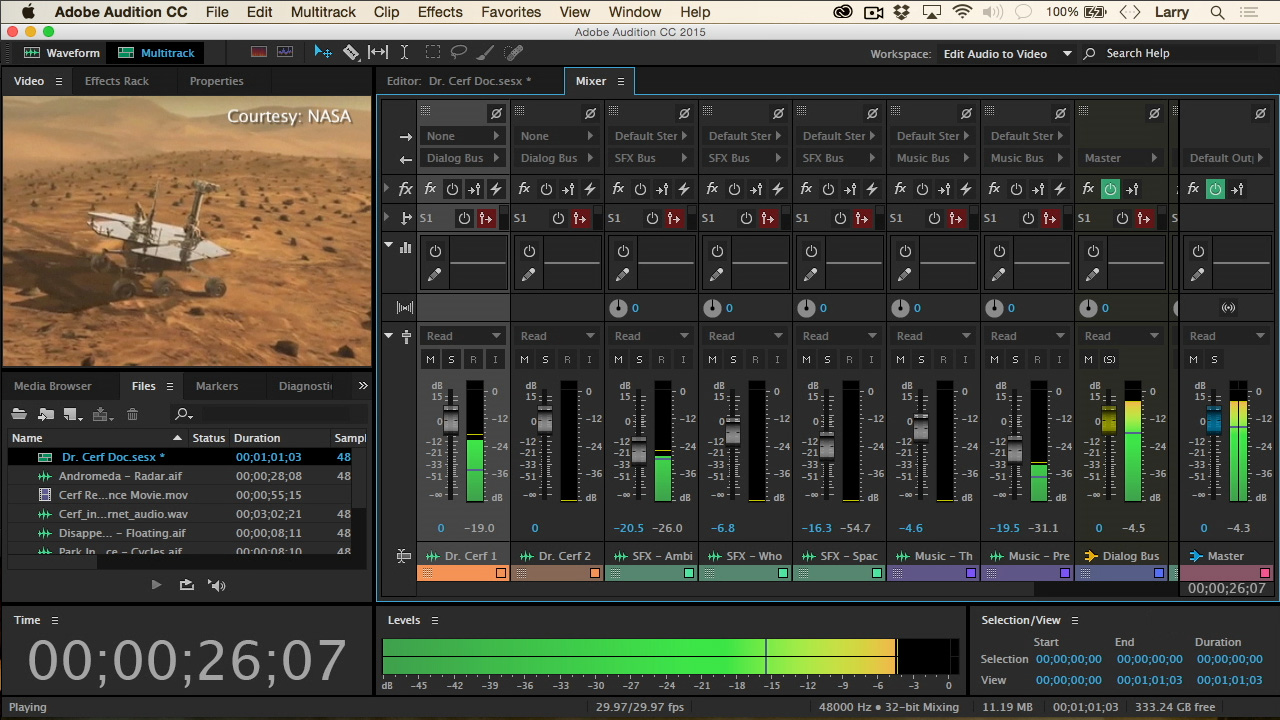
This tutorial will show you how to record and edit audio in Adobe Audition for podcast projects.
Edit, mix, record and restore audio. Audition is a comprehensive toolset that includes multitrack, waveform and spectral display for creating, mixing, editing and restoring audio content. This powerful audio workstation is designed to accelerate video production workflows and audio finishing — and deliver a polished mix with pristine sound.
Before you can record in Audition, you will first need to select the input source for the track that you would like to use. In this case, when using the Podcast template, you can use the Host track as your main recording track.
Click the double arrows button above the track name panels to access the input/output selections.
To set the input for the track, first look at the track name panel. In the middle of the track name panel, right under the volume controls for the track, you will see the input selection, indicated by an arrow pointing to the right, with None as the default selection.
Adobe Audition Editing Basics
This is where the input source will be set. To select your microphone, click the arrow on the right side and then select the microphone that you would like to use. For recording your voice, we suggest that you use the Mono input if available.
Now that you have the input selected, you will need to arm the track to be ready to record. To do this, look at the track name and in the right hand corner of the name you should see three buttons labeled M, S, and R. Click the R button to arm the track to record.
Now you are ready to record. To begin, simply click the red Record button located below the tracks.
As you record, you will see your audio come into the track in red.
When finished, simply click the stop button below the tracks.
You can start and stop periodically, and then edit out the breaks, to get a smoother recording. Spyair sakura mitsu tsuki mp3 juice.
If you need to edit your recording, you can use the Blade tool to cut any part of your recording up to make changes. In this example, let’s assume you needed to delete a section of audio that you are not happy with.
First, you will need to select the blade tool. This icon looks like a razor blade and is located at the top of the interface.
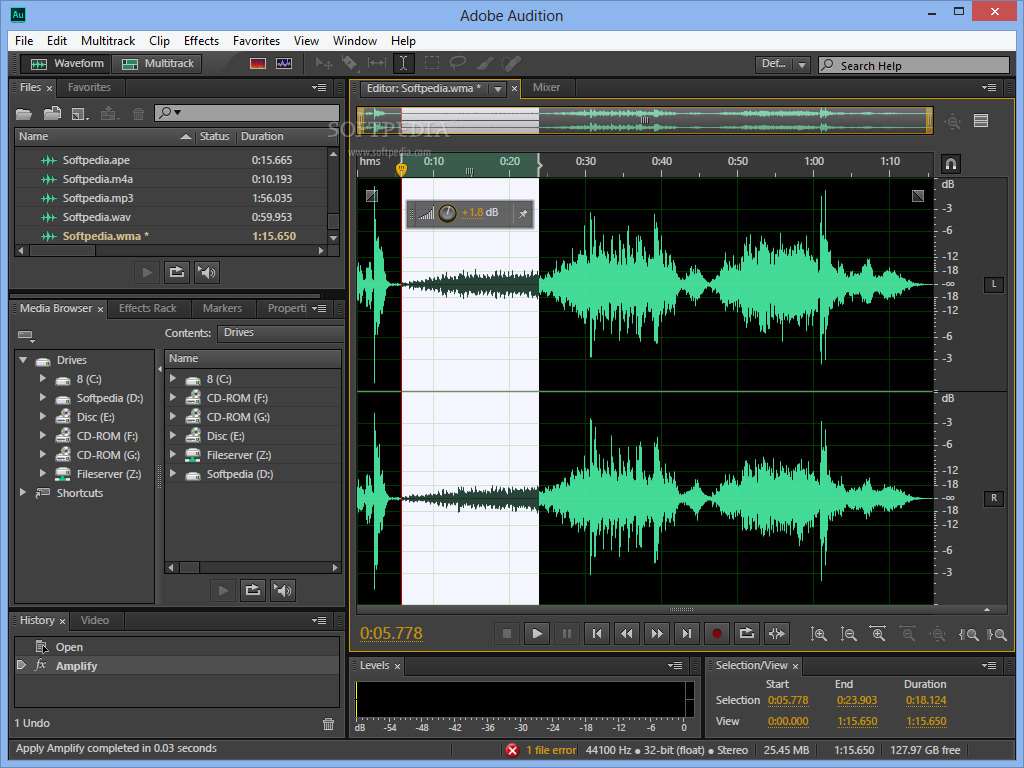
Recording Audio Adobe Audition
Once selected, you can simply click on the track you would like to edit to at the time that you’d like to cut the track at. In this case, two cuts will be made so that you can delete the middle section out of the project.
Once you’ve made your cuts, before you can delete the section in the middle, you will need to switch from using the blade tool to the Move tool. This tool is located directly to the left of the Blade tool at the top menu.
Now you can select the section that you’d like to get rid of, and press the Delete key on your keyboard to remove it.
To get rid of the gap in-between the two pieces, simply click and drag the clip and move it to the end of the first clip.